



Choosing the Right Materials for Modular Kitchens
A modular kitchen is more than just a cooking space—it is a blend of design, functionality, and durability. With daily exposure to heat, moisture, and constant usage, selecting the right materials becomes crucial to ensure long-lasting performance and a refined aesthetic.
From core materials to surface finishes, every element plays a vital role in building a kitchen that is both practical and visually appealing.
Understanding the Importance of Material Selection
The performance of a modular kitchen depends largely on the quality of materials used beneath and above the surface. While finishes define the look, the core materials ensure strength, stability, and longevity.
A well-designed kitchen should offer:
- Resistance to moisture and humidity
- Strong load-bearing capacity
- Easy maintenance and cleaning
- Long-term durability
Core Materials – The Foundation of Your Kitchen
Plywood – Strength & Reliability
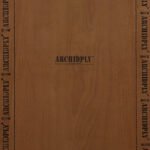
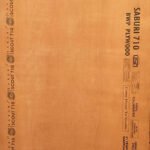
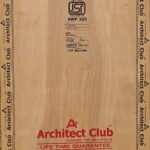
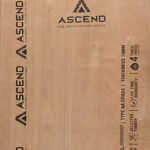
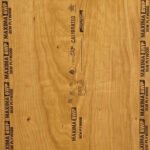
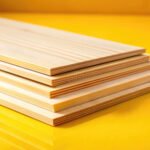
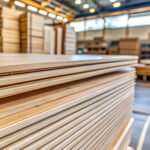
Plywood is one of the most preferred materials for modular kitchens due to its high strength and moisture resistance. Especially BWP (Boiling Waterproof) grade plywood is ideal for kitchen environments.
Why choose plywood:
- Excellent durability
- Strong screw-holding capacity
- Resistance to warping and bending
It is best suited for base cabinets, shutters, and structural frameworks.
MDF & HDMR – Smooth Finish & Precision
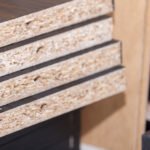
MDF and HDMR boards are engineered for uniformity and smooth finishes, making them ideal for shutters and decorative elements.
MDF is suitable for dry areas and painted finishes. HDMR offers better moisture resistance and strength.
These materials are commonly used for:
- Cabinet shutters
- Routed designs
- Painted kitchen panels
Surface Materials – Defining the Look
Laminates – Practical & Versatile
Laminates are widely used in modular kitchens due to their affordability and durability. Available in various finishes like matte, gloss, and textured, they offer flexibility in design.
Benefits:
- Scratch and stain resistance
- Easy to clean
- Wide range of colors and patterns
Acrylic Laminates – High-Gloss Luxury
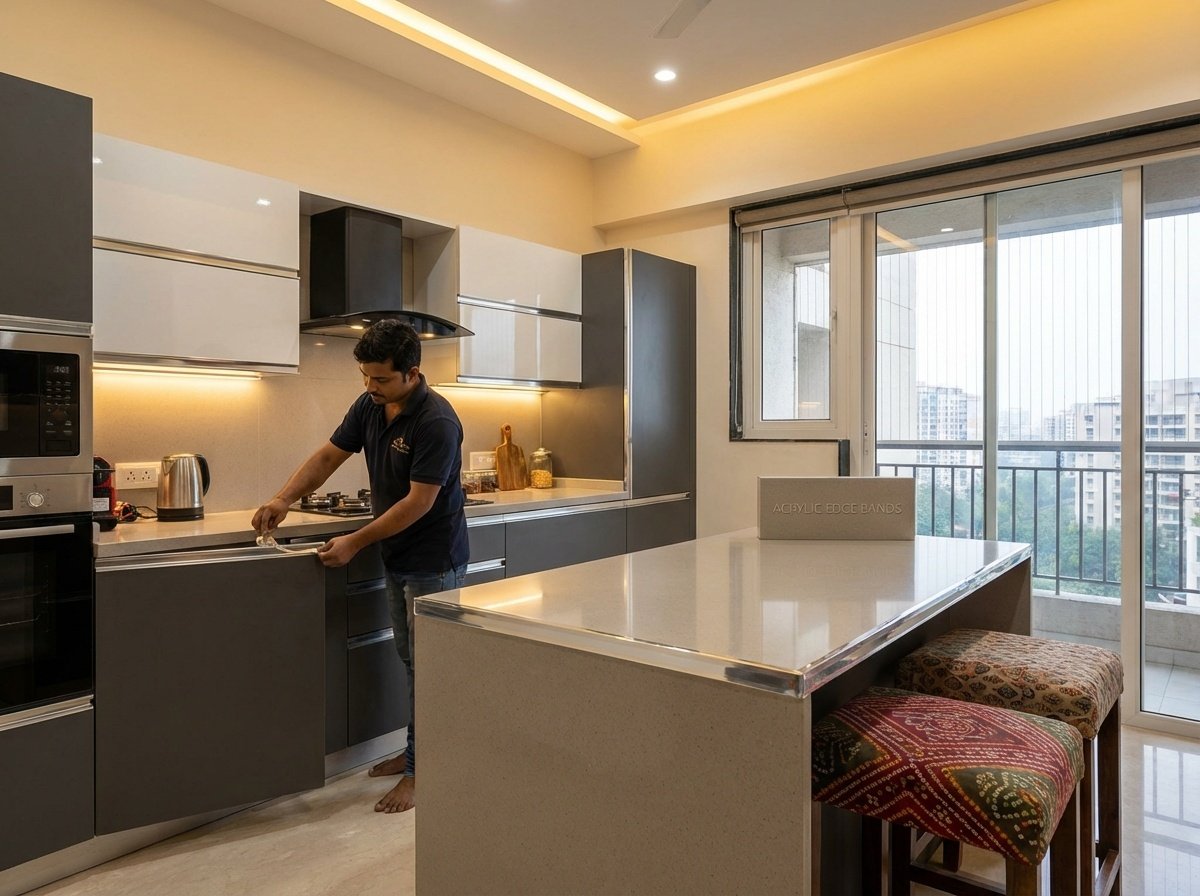
Acrylic finishes are perfect for modern kitchens that demand a sleek and premium look. Their reflective surface adds brightness and depth to the space.
Key features:
- Mirror-like finish
- High durability
- Moisture resistance
Ideal for kitchen shutters and visible surfaces.
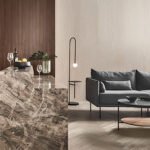
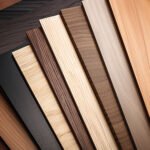
Veneers – Natural & Elegant
For those who prefer a more natural aesthetic, veneers provide the beauty of real wood.
Advantages:
- Unique grain patterns
- Warm and luxurious appeal
- Timeless design
Best suited for premium kitchen spaces with a classic touch.
Additional Considerations
Moisture Resistance: Kitchens are high-moisture areas, so materials must be able to withstand humidity without swelling or damage.
Maintenance: Choose surfaces that are easy to clean and maintain, especially for areas exposed to oil and stains.
Budget vs Performance: Balancing cost with durability is essential. Investing in quality materials ensures long-term savings and fewer repairs.
Popular Material Combinations
To achieve both performance and aesthetics, common combinations include:
- Plywood + Laminate: Durable and cost-effective
- Plywood + Acrylic: Premium, modern finish
- HDMR + Paint Finish: Sleek and seamless look
- Plywood + Veneer: Luxury natural appeal
Choosing the right materials for a modular kitchen is the key to creating a space that is functional, durable, and visually appealing. By selecting the right combination of plywood, MDF/HDMR, laminates, acrylics, or veneers, you can build a kitchen that not only looks stunning but also stands up to everyday use with ease.